Vai al contenuto principale

Press Kit

Foto ad alta risoluzione, biografia e documenti per stampa e organizzatori

Testi e documenti

Da copiare, oppure da scaricare in PDF o in Word. I numeri vengono letti dall’archivio al momento dello scaricamento: non sono mai vecchi.

Lingua

Bio breve

Daniele Camiz è un direttore d’orchestra italiano. La sua attività è dedicata al grande repertorio sinfonico europeo e alla costruzione di progetti che mettono al centro l’ascolto orchestrale, la crescita dei musicisti e la condivisione del processo creativo con il pubblico. È fondatore e direttore musicale dell’Orchestra ICNT, direttore artistico della stagione I Concerti nel Tempio e ideatore della Mozart Symphonies Challenge.

PDF Word

Bio media

Daniele Camiz è un direttore d’orchestra italiano, fondatore e direttore musicale dell’Orchestra ICNT e direttore artistico della stagione concertistica I Concerti nel Tempio, attiva a Roma dal 2014. La sua attività è dedicata principalmente al grande repertorio sinfonico europeo, con particolare attenzione a Mozart, Beethoven e al repertorio classico-romantico.

Dopo gli studi pianistici e musicologici, si è formato in direzione d’orchestra presso la Escuela de Dirección Maestro Francisco Navarro Lara, conseguendo il diploma LRSM (Licentiate of the Royal Schools of Music) dell’Associated Board of the Royal Schools of Music (ABRSM) di Londra. Nel 2018 ha ottenuto la Batuta de Bronce al Concurso Internacional de Dirección de Orquesta 3.0.

Dal 2016 sviluppa con l’Orchestra ICNT un’intensa attività concertistica e numerosi progetti artistici. Tra questi, la Mozart Symphonies Challenge, dedicata all’esecuzione dell’intero repertorio sinfonico di Wolfgang Amadeus Mozart, propone un format originale nel quale prova aperta al pubblico, diretta streaming e concerto si svolgono nella stessa giornata, permettendo di condividere non solo il risultato finale, ma anche il processo di costruzione dell’interpretazione.

Collabora inoltre con la pianista Marcella Crudeli nel progetto Magisterium, dedicato ai giovani pianisti, partecipando alla selezione e alla valutazione dei solisti, alla progettazione artistica e alla direzione dei concerti con orchestra. Accanto all’attività orchestrale dirige dal 2015 il Coro Raro, ensemble vocale indipendente dedicato principalmente al repertorio a cappella.

Il suo lavoro pone al centro l’ascolto reciproco, la costruzione del suono d’insieme e la convinzione che la musica trovi la sua espressione più autentica quando riesce a coinvolgere musicisti e pubblico nello stesso percorso di scoperta.

PDF Word

Bio lunga

Daniele Camiz è un direttore d’orchestra italiano, fondatore e direttore musicale dell’Orchestra ICNT e direttore artistico della stagione concertistica I Concerti nel Tempio, attiva a Roma dal 2014.

Dopo gli studi pianistici con Maria Teresa Carunchio, consegue il Diploma di Pianoforte presso il Conservatorio “G. Rossini” di Pesaro, il Diploma di Musica da Camera presso il Conservatorio “Santa Cecilia” di Roma e la Laurea magistrale con lode in Musicologia presso l’Università “La Sapienza” di Roma. Successivamente si dedica alla direzione d’orchestra, formandosi presso la Escuela de Dirección Maestro Francisco Navarro Lara e conseguendo il diploma LRSM (Licentiate of the Royal Schools of Music) dell’Associated Board of the Royal Schools of Music (ABRSM) di Londra. Nel 2018 riceve la Batuta de Bronce al Concurso Internacional de Dirección de Orquesta 3.0.

Nel febbraio 2014 fonda I Concerti nel Tempio, una stagione nata quasi spontaneamente dal desiderio di creare occasioni per fare musica insieme e offrirla alla comunità. Inizialmente dedicata alla musica da camera, la rassegna si sviluppa progressivamente fino a diventare un punto di riferimento per il repertorio orchestrale, favorendo l’incontro fra giovani musicisti, professionisti e appassionati.

Da questa esperienza nasce nel 2016 l’Orchestra ICNT, della quale è fondatore e direttore musicale. Orchestra a progetto, l’ICNT riunisce musicisti provenienti da percorsi, generazioni e nazionalità differenti, accomunati dal desiderio di affrontare con serietà il grande repertorio sinfonico. Il lavoro dell’ensemble si fonda sulla collaborazione, sull’ascolto reciproco e sulla ricerca di un suono costruito collettivamente, in un clima che unisce rigore, serenità ed entusiasmo.

Questa visione trova la sua espressione più caratteristica nella Mozart Symphonies Challenge, progetto dedicato all’esecuzione dell’intero repertorio sinfonico di Wolfgang Amadeus Mozart. Ogni appuntamento concentra studio, prova aperta al pubblico, diretta streaming e concerto nella stessa giornata, permettendo agli ascoltatori di seguire non solo il risultato finale, ma anche il percorso attraverso cui l’interpretazione prende forma. Il progetto rappresenta un’esperienza originale di divulgazione musicale e di lavoro orchestrale, nella quale il pubblico diventa parte del processo creativo.

Accanto all’attività orchestrale dirige dal 2015 il Coro Raro, ensemble vocale indipendente dedicato principalmente al repertorio a cappella e a musiche provenienti da diverse tradizioni.

Collabora inoltre stabilmente con la pianista Marcella Crudeli nel progetto Magisterium, dedicato ai giovani pianisti. In questo contesto partecipa alla selezione e alla valutazione dei solisti, alla progettazione artistica delle diverse edizioni e dirige i concerti con orchestra, offrendo ai migliori allievi l’opportunità di confrontarsi con il grande repertorio concertistico in un contesto professionale.

Nel corso della sua attività ha diretto 81 concerti, affrontando 198 titoli di 59 compositori, con particolare attenzione al repertorio sinfonico europeo tra Classicismo e Romanticismo. Tra i progetti più significativi figura la Mozart Symphonies Challenge, che lo ha portato a dirigere 48 delle 50 sinfonie di Mozart, all’interno di un percorso dedicato all’esplorazione integrale del repertorio sinfonico mozartiano.

Al centro del suo lavoro vi è la convinzione che la qualità di un’orchestra nasca dall’ascolto reciproco, dalla responsabilità condivisa e dalla capacità di trasformare lo studio della partitura in un’esperienza musicale autentica. Più che la ricerca di un risultato perfetto, il suo interesse è rivolto alla costruzione di un linguaggio orchestrale vivo, capace di coinvolgere musicisti e pubblico nello stesso percorso di scoperta.

PDF Word

Scheda artistica

Profilo

Nazionalità: Italiana

Base: Roma, Italia

Ruolo: Direttore d’orchestra

Attività e progetti

I Concerti nel Tempio (dal 2014)

Fondatore e direttore artistico della stagione concertistica I Concerti nel Tempio, nata nel 2014 presso la Chiesa Valdese di Piazza Cavour a Roma. Dopo una prima fase dedicata prevalentemente alla musica da camera, la stagione si è progressivamente orientata verso il grande repertorio orchestrale.

Coro Raro (dal 2015)

Direttore stabile del Coro Raro, ensemble vocale indipendente dedicato principalmente al repertorio a cappella e a musiche provenienti da diverse tradizioni.

Orchestra ICNT (dal 2016)

Fondatore e direttore musicale dell’Orchestra ICNT, orchestra a progetto che riunisce giovani musicisti, professionisti, studenti e appassionati, favorendo l’incontro fra generazioni, percorsi formativi e provenienze diverse attraverso il grande repertorio sinfonico.

Mozart Symphonies Challenge (2019–2026)

Ideatore e direttore della Mozart Symphonies Challenge, progetto dedicato all’esecuzione dell’intero repertorio sinfonico di Wolfgang Amadeus Mozart. Ogni appuntamento concentra studio, prova aperta al pubblico, diretta streaming e concerto nella stessa giornata, offrendo al pubblico la possibilità di assistere alla costruzione dell’interpretazione orchestrale.

Magisterium

Collabora stabilmente con la pianista Marcella Crudeli nel progetto Magisterium, dedicato ai giovani pianisti. Oltre alla direzione dell’orchestra, partecipa alla selezione e alla valutazione dei solisti e alla progettazione artistica delle diverse edizioni, offrendo ai migliori allievi la possibilità di eseguire il repertorio concertistico per pianoforte e orchestra in pubblico.

Attività artistica

  • 81 concerti diretti
  • 198 titoli in repertorio
  • 241 esecuzioni pubbliche
  • 59 compositori
  • 63 sinfonie integrali dirette
    • 48 di Wolfgang Amadeus Mozart
    • 15 di altri compositori
  • 74 solisti collaboratori
  • 69 concerti con l’Orchestra ICNT
  • 59 concerti presso la Chiesa Valdese di Piazza Cavour (Roma)

Formazione

  • LRSM (Licentiate of the Royal Schools of Music) in Direzione d’Orchestra – Associated Board of the Royal Schools of Music (ABRSM), Londra
  • Formazione in Direzione d’Orchestra presso la Escuela de Dirección Maestro Francisco Navarro Lara
  • Laurea magistrale con lode in Musicologia – Università “La Sapienza” di Roma
  • Diploma in Musica da Camera – Conservatorio “Santa Cecilia” di Roma
  • Diploma in Pianoforte – Conservatorio “G. Rossini” di Pesaro

Riconoscimenti

  • Batuta de Bronce – Concurso Internacional de Dirección de Orquesta 3.0 (2018)

Repertorio

Repertorio prevalentemente sinfonico, dal Classicismo al primo Novecento, con particolare attenzione ai repertori di Mozart, Beethoven, Mendelssohn, Brahms, Schumann e Dvořák.

Comprende sinfonie, concerti per strumento solista e orchestra, ouverture, suite, poemi sinfonici, pagine vocali e musica per ensemble.

Per il dettaglio completo del repertorio e delle statistiche aggiornate si rimanda al documento Presentazione del repertorio.

Collaborazioni

Nel corso della sua attività ha collaborato con orchestre ed ensemble in Italia e all’estero, sviluppando progetti concertistici e formativi in Europa, Sud America e Asia.

Sito

www.danielecamiz.com

PDF Word

Master Profile

Daniele Camiz è un direttore d’orchestra italiano.

La direzione è arrivata relativamente tardi nel suo percorso professionale, ma appartiene al suo modo di vivere la musica fin dall’infanzia. Prima ancora di conoscerne la tecnica, ascoltare significava seguirne il gesto, immaginarne il movimento e cercare di renderne visibile l’espressione.

Il suo lavoro nasce da una convinzione semplice: un’orchestra comincia davvero a fare musica quando smette di limitarsi a suonare insieme e comincia ad ascoltarsi. È allora che emergono fraseggio, carattere, colori, contrasti e quella varietà di emozioni che costituisce il senso stesso dell’interpretazione. Una prova riuscita non è necessariamente quella nella quale tutto è perfetto, ma quella in cui il tempo sembra scorrere troppo in fretta, i musicisti arrivano stanchi alla fine della giornata ma conservano entusiasmo ed energia, perché hanno scoperto qualcosa nella musica e nel modo di farla insieme.

Nel febbraio 2014, insieme alla moglie, dà vita alla rassegna I Concerti nel Tempio, nata quasi spontaneamente dal desiderio di riunire amici musicisti e condividere la musica con la comunità. I primi concerti, dedicati alla musica da camera, si fanno con un pianoforte a nolo e con la partecipazione volontaria dei musicisti — come accade ancora oggi per l’orchestra e per il direttore. I concerti sono sempre stati gratuiti; le offerte raccolte non vanno a chi suona ma agli strumenti: prima all’acquisto di quel pianoforte, che diventa così uno strumento stabile della Chiesa Valdese di Piazza Cavour, poi al restauro dell’organo, e oggi al fondo per la loro manutenzione. Nel tempo la rassegna cresce e sempre più giovani musicisti scelgono questo spazio per le loro prime esperienze concertistiche.

Nel 2016, durante il suo percorso di formazione direttoriale, nasce quasi naturalmente anche l’Orchestra ICNT. Un primo concerto con una piccola orchestra d’archi, organizzato per Pasquetta, si trasforma in un progetto stabile che negli anni successivi diventa il cuore della stagione concertistica. Dopo la pandemia l’attività della rassegna si concentra principalmente sul repertorio orchestrale.

L’Orchestra ICNT mantiene ancora oggi lo spirito con cui è nata: un’orchestra a progetto nella quale si incontrano musicisti di età, formazione ed esperienza diverse, accomunati dal desiderio di affrontare con serietà il grande repertorio sinfonico. Le prove si svolgono in un clima esigente ma sereno, nel quale responsabilità individuale, ascolto reciproco e fiducia favoriscono la crescita dell’ensemble e la ricerca di una sempre maggiore autonomia musicale.

Questa visione trova la sua espressione più compiuta nella Mozart Symphonies Challenge, progetto dedicato all’integrale delle sinfonie di Wolfgang Amadeus Mozart. Nato dall’esperienza maturata durante gli studi con Francisco Navarro Lara e dalla volontà di affrontare in modo sistematico un repertorio raramente percorso nella sua interezza, il progetto concentra preparazione, prova e concerto in una sola giornata. La prova è aperta al pubblico e trasmessa in diretta streaming: errori, decisioni e soluzioni non vengono nascosti, perché il processo creativo è parte integrante dell’esperienza musicale.

L’esperienza della Challenge ha progressivamente affinato un modo di lavorare fondato sulla rapidità del pensiero, sull’ascolto costante e sulla capacità di individuare ciò che è davvero essenziale. Il poco tempo disponibile non diventa un limite, ma uno stimolo a studiare con maggiore profondità, a scegliere con chiarezza le priorità e a valorizzare il contributo di ogni musicista.

Nel repertorio mozartiano ricerca soprattutto freschezza, trasparenza e teatralità. Più che un ideale astratto di perfezione, vi riconosce una continua rappresentazione delle emozioni umane, dei loro contrasti e dei loro improvvisi cambiamenti. La fedeltà alla partitura non viene intesa come un vincolo alla libertà interpretativa, ma come il punto di partenza per comprenderne più profondamente il significato.

Accanto all’attività orchestrale dirige il Coro Raro, progetto indipendente dedicato principalmente al repertorio vocale a cappella e a musiche provenienti da diverse tradizioni.

La formazione musicologica costituisce una componente essenziale del suo lavoro. Lo studio delle fonti, del contesto storico e delle prassi esecutive rappresenta uno strumento per restituire alla musica freschezza, chiarezza e capacità comunicativa, senza trasformarla in un oggetto museale.

Alla base di tutto rimane una convinzione maturata nel corso degli anni: la musica nasce dall’incontro fra persone. La tecnica, lo studio e il rigore sono strumenti indispensabili, ma acquistano significato soltanto quando permettono a un gruppo di musicisti di ascoltarsi, respirare insieme e comunicare con autenticità al pubblico.

PDF Word

Repertorio

Progetti artistici

Mozart Symphonies Challenge

48 delle 50 sinfonie di Mozart eseguite integralmente nell’ambito della Mozart Symphonies Challenge (2019–2026). Conclusione del ciclo prevista per dicembre 2026.

Magisterium

Collaborazione artistica con Marcella Crudeli dedicata alla valorizzazione di giovani pianisti. Ad oggi il progetto comprende sette edizioni, ventuno solisti e quindici diversi concerti per pianoforte e orchestra.

Sinfonie

Wolfgang Amadeus Mozart

48 sinfonie complete.

Altre sinfonie complete

Ludwig van Beethoven
  • Sinfonia n. 2 in re maggiore op. 36
  • Sinfonia n. 5 in do minore op. 67
Johannes Brahms
  • Sinfonia n. 4 in mi minore op. 98
Benjamin Britten
  • Simple Symphony op. 4
Antonín Dvořák
  • Sinfonia n. 9 in mi minore op. 95 Dal Nuovo Mondo
Franz Joseph Haydn
  • Sinfonia n. 101 in re maggiore Hob. I:101 L’orologio
Felix Mendelssohn Bartholdy
  • Sinfonia per archi n. 7 in re minore MWV N 7
  • Sinfonia n. 3 in la minore op. 56 Scozzese
  • Sinfonia n. 4 in la maggiore op. 90 Italiana
  • Sinfonia n. 5 in re maggiore op. 107 Riforma
Sergej Prokof’ev
  • Sinfonia n. 1 in re maggiore op. 25 Classica
Joachim Raff
  • Sinfonietta per strumenti a fiato op. 188
Franz Schubert
  • Sinfonia in si minore D 759 Incompiuta
Robert Schumann
  • Sinfonia n. 4 in re minore op. 120
Pëtr Il’ič Čajkovskij
  • Sinfonia n. 6 in si minore op. 74 Patetica

Concerti

Pianoforte

Ludwig van Beethoven
  • Concerto n. 1 op. 15
  • Concerto n. 2 op. 19
  • Concerto n. 3 op. 37
  • Concerto n. 5 op. 73 Imperatore
Marco Enrico Bossi
  • Concerto per organo op. 100
Fryderyk Chopin
  • Concerto n. 1 op. 11
  • Concerto n. 2 op. 21
George Gershwin
  • Rhapsody in Blue
Edvard Grieg
  • Concerto op. 16
Franz Joseph Haydn
  • Concerto Hob. XVIII:11 (eseguito integralmente in due movimenti)
Felix Mendelssohn Bartholdy
  • Concerto n. 1 op. 25
Wolfgang Amadeus Mozart
  • Concerto n. 12 K.414
  • Concerto n. 20 K.466
  • Concerto n. 23 K.488
Giovanni Paisiello
  • Concerto n. 2
Robert Schumann
  • Concerto op. 54 (un movimento)
Pëtr Il’ič Čajkovskij
  • Concerto n. 1 op. 23 (primo movimento)

Violino

  • Johann Sebastian Bach — BWV 1041
  • Johannes Brahms — op. 77
  • Felix Mendelssohn Bartholdy — op. 64
  • Jean Sibelius — op. 47

Violoncello

  • Robert Schumann — op. 129
  • Pëtr Il’ič Čajkovskij — Variazioni su un tema Rococò op. 33

Altri strumenti

  • Luigi Cherubini — Sonata n. 1 per corno e orchestra d’archi
  • Aleksandr Glazunov — Concerto per sassofono op. 109
  • Wolfgang Amadeus Mozart — Concerto per corno n. 1 K.412
  • Wolfgang Amadeus Mozart — Concerto per flauto e arpa K.299 (secondo movimento)

Ouverture e sinfonie d’opera

Wolfgang Amadeus Mozart
  • Il ratto dal serraglio
  • Idomeneo
  • L’impresario teatrale
  • Le nozze di Figaro
  • Don Giovanni
  • Il flauto magico
  • La clemenza di Tito
Felix Mendelssohn Bartholdy
  • Le Ebridi
  • La bella Melusina
  • Sogno di una notte di mezza estate
Fanny Mendelssohn
  • Ouverture in do maggiore H.265
Ludwig van Beethoven
  • Coriolano op. 62
  • Egmont op. 84
  • La consacrazione della casa op. 124
Johannes Brahms
  • Ouverture accademica op. 80
  • Ouverture tragica op. 81
Franz Schubert
  • D.590
  • D.591
Gioachino Rossini
  • L’italiana in Algeri
  • La gazza ladra
Giuseppe Verdi
  • Nabucco
  • I vespri siciliani
  • La forza del destino
Vincenzo Bellini
  • Sinfonia in sol minore
Carl Maria von Weber
  • Il franco cacciatore
Pëtr Il’ič Čajkovskij
  • Romeo e Giulietta

Musica sacra

Wolfgang Amadeus Mozart
  • Exsultate, jubilate K.165
  • Messa K.257
  • Messa dell’Incoronazione K.317

Suite

  • Johann Sebastian Bach — Suite n. 3 BWV 1068
  • Edvard Grieg — Peer Gynt, Suite n. 1 op. 46
  • Edvard Grieg — Dai tempi di Holberg op. 40
  • Georg Friedrich Händel — Suite n. 3 HWV 350
  • Carl Nielsen — Little Suite op. 1
  • Ottorino Respighi — Antiche arie e danze per liuto, Suite n. 3
  • Peter Warlock — Capriol Suite

Altre pagine orchestrali

  • Samuel Barber — Adagio op. 11
  • Johannes Brahms — Danze ungheresi n. 1, 3 e 5
  • Gaetano Donizetti — Sinfonia per fiati A.509
  • Antonín Dvořák — Scherzo capriccioso op. 66
  • Edward Elgar — Serenata per archi op. 20
  • Edvard Grieg — Danze norvegesi op. 35
  • Vasilij Kalinnikov — Serenata
  • Nikolaj Rimskij-Korsakov — Capriccio spagnolo op. 34
  • Franz Schubert — Rondò D.438
  • Bedřich Smetana — La Moldava
  • Johann Strauss II — Sul bel Danubio blu, Vino, donne e canto, Marcia egiziana
  • Pëtr Il’ič Čajkovskij — Capriccio italiano op. 45

Repertorio vocale

Arie d’opera, liriche da concerto e pagine vocali con orchestra di:

  • Bellini
  • Delibes
  • Donizetti
  • Dvořák
  • Fanny Mendelssohn
  • Mascagni
  • Mozart
  • Puccini
  • Rossini
  • Verdi

oltre a canzoni italiane e napoletane e al repertorio vocale coreano.

PDF Word

Short bio

Daniele Camiz is an Italian conductor. His work is devoted to the great European symphonic repertoire and to developing artistic projects centred on orchestral listening, the growth of musicians, and the sharing of the creative process with audiences. He is the founder and Music Director of Orchestra ICNT, Artistic Director of the concert season I Concerti nel Tempio, and creator of the Mozart Symphonies Challenge.

PDF Word

Medium bio

Daniele Camiz is an Italian conductor, founder and Music Director of Orchestra ICNT and Artistic Director of I Concerti nel Tempio, a concert season based in Rome since 2014.

His work is devoted primarily to the great European symphonic repertoire, with a particular focus on Mozart, Beethoven, and the Classical and Romantic traditions.

After completing his studies in piano and musicology, he trained in orchestral conducting at the Escuela de Dirección Maestro Francisco Navarro Lara, later earning the LRSM (Licentiate of the Royal Schools of Music) diploma from the Associated Board of the Royal Schools of Music (ABRSM), London. In 2018 he was awarded the Batuta de Bronce at the Concurso Internacional de Dirección de Orquesta 3.0.

Since 2016 he has developed an extensive concert activity with Orchestra ICNT, creating a number of artistic projects. Among them, the Mozart Symphonies Challenge, devoted to the complete symphonic works of Wolfgang Amadeus Mozart, presents an original format in which an open rehearsal, live streaming, and concert all take place on the same day, allowing audiences to experience not only the final performance but also the process through which the interpretation is shaped.

He also collaborates regularly with pianist Marcella Crudeli on the Magisterium project for young pianists, taking part in the selection and evaluation of soloists, the artistic planning of each edition, and conducting the orchestral performances. Alongside his orchestral work, he has served as Music Director of Coro Raro, an independent vocal ensemble devoted primarily to the a cappella repertoire, since 2015.

At the heart of his work lies the belief that orchestral music reaches its fullest expression through attentive listening, the collective shaping of sound, and the shared journey of discovery between musicians and audiences.

PDF Word

Full bio

Daniele Camiz is an Italian conductor, founder and Music Director of Orchestra ICNT and Artistic Director of I Concerti nel Tempio, a concert season established in Rome in 2014.

After studying piano with Maria Teresa Carunchio, he earned a Diploma in Piano from the G. Rossini Conservatory in Pesaro, a Diploma in Chamber Music from the Santa Cecilia Conservatory in Rome, and graduated summa cum laude in Musicology from Sapienza University of Rome. He subsequently devoted himself to orchestral conducting, training at the Escuela de Dirección Maestro Francisco Navarro Lara and earning the LRSM (Licentiate of the Royal Schools of Music) diploma from the Associated Board of the Royal Schools of Music (ABRSM), London. In 2018 he was awarded the Batuta de Bronce at the Concurso Internacional de Dirección de Orquesta 3.0.

In February 2014 he founded I Concerti nel Tempio, a concert season born almost spontaneously from the desire to bring musicians together and share music with the local community. Initially devoted to chamber music, the series gradually evolved into a reference point for orchestral repertoire, bringing together young musicians, professionals, and dedicated amateurs.

This experience led, in 2016, to the creation of Orchestra ICNT, of which he is founder and Music Director. Conceived as a project-based orchestra, ICNT brings together musicians of different backgrounds, generations, and nationalities, united by a shared commitment to the great symphonic repertoire. The ensemble’s work is rooted in collaboration, attentive listening, and the collective shaping of orchestral sound, combining artistic rigour with enthusiasm and mutual trust.

This artistic vision finds its fullest expression in the Mozart Symphonies Challenge, a project dedicated to the complete symphonic works of Wolfgang Amadeus Mozart. Each event brings together study, an open rehearsal, live streaming, and the concert itself within a single day, allowing audiences to experience not only the final performance but also the creative process through which the interpretation takes shape. The project has become an original model of musical outreach and orchestral work, inviting listeners to become active witnesses to the making of a performance.

Alongside his orchestral activity, since 2015 he has been Music Director of Coro Raro, an independent vocal ensemble devoted primarily to the a cappella repertoire and to vocal music from a variety of traditions.

He also collaborates regularly with pianist Marcella Crudeli on the Magisterium project for young pianists. In this context, he takes part in the selection and evaluation of soloists, contributes to the artistic planning of each edition, and conducts the orchestral performances, offering outstanding young musicians the opportunity to perform major concerto repertoire in a professional concert setting.

Over the course of his career, he has conducted 81 concerts, performing 198 works by 59 composers, with a particular focus on the European symphonic repertoire from the Classical and Romantic periods. Among his most significant achievements is the Mozart Symphonies Challenge, through which he has already conducted 48 of Mozart’s 50 symphonies as part of a complete exploration of the composer’s symphonic output.

At the heart of his work lies the conviction that the quality of an orchestra grows from attentive listening, shared responsibility, and the ability to transform the study of a score into an authentic musical experience. Rather than pursuing technical perfection as an end in itself, he seeks to build a living orchestral language capable of engaging musicians and audiences alike in the same journey of discovery.

PDF Word

Artistic profile

Profile

Nationality: Italian

Based in: Rome, Italy

Profession: Conductor

Artistic activity & projects

I Concerti nel Tempio (since 2014)

Founder and Artistic Director of I Concerti nel Tempio, a concert season established in 2014 at the Waldensian Church of Piazza Cavour in Rome. Initially devoted primarily to chamber music, the series gradually evolved into a platform dedicated to the great orchestral repertoire.

Coro Raro (since 2015)

Music Director of Coro Raro, an independent vocal ensemble devoted primarily to the a cappella repertoire and vocal music from a variety of traditions.

Orchestra ICNT (since 2016)

Founder and Music Director of Orchestra ICNT, a project-based orchestra bringing together young musicians, professionals, students and dedicated amateurs, encouraging collaboration across generations, educational backgrounds and nationalities through the performance of the great symphonic repertoire.

Mozart Symphonies Challenge (2019–2026)

Creator and Music Director of the Mozart Symphonies Challenge, a project dedicated to the complete symphonic works of Wolfgang Amadeus Mozart. Each event combines score preparation, an open rehearsal, live streaming and the public performance within a single day, allowing audiences to experience the development of the musical interpretation from rehearsal to concert.

Artistic activity & projects · Continued

Magisterium

Regular collaborator with pianist Marcella Crudeli in the Magisterium project for young pianists. In addition to conducting the orchestra, he takes part in the selection and evaluation of soloists and in the artistic planning of each edition, offering outstanding students the opportunity to perform the concerto repertoire with orchestra in a public concert setting.

Artistic activity

  • 81 concerts conducted
  • 198 works in repertoire
  • 241 public performances
  • 59 composers performed
  • 63 complete symphonies conducted
    • 48 by Wolfgang Amadeus Mozart
    • 15 by other composers
  • 74 collaborating soloists
  • 69 concerts with Orchestra ICNT
  • 59 concerts at the Waldensian Church of Piazza Cavour (Rome)

Education

  • LRSM (Licentiate of the Royal Schools of Music) in Orchestral Conducting — Associated Board of the Royal Schools of Music (ABRSM), London
  • Orchestral Conducting studies at the Escuela de Dirección Maestro Francisco Navarro Lara
  • Master’s Degree (summa cum laude) in Musicology — Sapienza University of Rome
  • Diploma in Chamber Music — Conservatory of Music “Santa Cecilia”, Rome
  • Diploma in Piano — Conservatory of Music “G. Rossini”, Pesaro

Award

  • Batuta de Bronce — Concurso Internacional de Dirección de Orquesta 3.0 (2018)

Repertoire

Predominantly European symphonic repertoire, spanning the Classical period to the early twentieth century, with particular emphasis on Mozart, Beethoven, Mendelssohn, Brahms, Schumann and Dvořák.

The repertoire includes symphonies, concertos for solo instrument and orchestra, overtures, orchestral suites, symphonic poems, vocal works and chamber ensemble repertoire.

For a detailed repertoire list and updated statistics, see the accompanying Repertoire document.

International activity

Throughout his career, he has collaborated with orchestras and ensembles in Italy and abroad, developing concert and educational projects across Europe, South America and Asia.

Website

www.danielecamiz.com

PDF Word

Profile

Daniele Camiz is an Italian conductor.

Conducting entered his professional life relatively late, yet it has been part of the way he has experienced music since childhood. Long before learning its technique, listening meant following the gesture, imagining its movement and searching for a way to make musical expression visible.

His work is rooted in a simple conviction: an orchestra truly begins to make music when it stops merely playing together and starts listening to itself. This is where phrasing, character, colour, contrast and the full range of musical expression emerge. A successful rehearsal is not necessarily one in which everything is perfect, but one in which time seems to pass too quickly and the musicians finish the day physically tired yet full of energy and enthusiasm, having discovered something new in the music and in the way they create it together.

In February 2014, together with his wife, he founded I Concerti nel Tempio, a concert season that began almost spontaneously from the desire to bring musician friends together and share music with the local community. The first concerts, devoted to chamber music, were played on a hired piano by musicians taking part voluntarily — as the orchestra and the conductor still do today. The concerts have always been free of charge; the offerings collected go not to the performers but to the instruments: first towards buying that piano, which thus became a permanent instrument of the Waldensian Church of Piazza Cavour in Rome, then towards restoring the organ, and today towards the fund for their upkeep. Over the years the season grew steadily, and an increasing number of young musicians chose this space for their first public performances.

In 2016, while pursuing his conducting studies, Orchestra ICNT came into being just as naturally. What began as a single Easter Monday concert with a small string orchestra gradually developed into a permanent artistic project and, in the years that followed, became the core of the concert season. After the pandemic, the activity of I Concerti nel Tempio became almost entirely devoted to orchestral repertoire.

Orchestra ICNT still preserves the spirit in which it was founded: a project-based orchestra bringing together musicians of different ages, backgrounds and levels of experience, united by the desire to approach the great symphonic repertoire with commitment and seriousness. Rehearsals take place in an atmosphere that is both demanding and relaxed, where individual responsibility, attentive listening and mutual trust encourage the ensemble to grow and gradually achieve greater musical independence.

This vision finds its fullest expression in the Mozart Symphonies Challenge, a project devoted to the complete symphonies of Wolfgang Amadeus Mozart. Inspired by his studies with Francisco Navarro Lara and by the desire to explore systematically a repertoire rarely performed as a complete cycle, each event brings together preparation, rehearsal and performance within a single day. The rehearsal is open to the public and live-streamed: mistakes, decisions and solutions are never concealed, because the creative process itself is considered an essential part of the musical experience.

The Challenge has gradually shaped a way of working based on rapid musical thinking, constant listening and the ability to identify what truly matters in a score. Limited rehearsal time is not regarded as a constraint but as an incentive to study more deeply, define priorities with clarity and make the most of every musician’s contribution.

In Mozart’s music he seeks above all freshness, transparency and a strong sense of theatre. Rather than an abstract ideal of perfection, he finds in these works a continuous representation of human emotions, their contrasts and their sudden changes. Fidelity to the score is therefore understood not as a limitation on interpretative freedom but as the starting point for a deeper understanding of its meaning.

Alongside his orchestral activity he has served since 2015 as Music Director of Coro Raro, an independent vocal ensemble devoted primarily to a cappella repertoire and vocal music from a variety of traditions.

His background in musicology forms an essential part of his artistic identity. The study of sources, historical context and performance practice provides the tools through which he seeks to restore freshness, clarity and communicative power to the music, without allowing it to become a museum object.

At the heart of his work remains a conviction that has grown stronger over the years: music is born through the encounter between people. Technique, study and discipline are indispensable, but they acquire their true meaning only when they enable a group of musicians to listen to one another, breathe together and communicate with authenticity to their audience.

PDF Word

Conducting repertoire

Artistic projects

Mozart Symphonies Challenge

48 of Mozart’s 50 symphonies have been performed as part of the Mozart Symphonies Challenge (2019–2026). Completion of the complete cycle is scheduled for December 2026.

Magisterium

Ongoing collaboration with pianist Marcella Crudeli dedicated to the artistic development of young pianists. To date, the project comprises: 7 editions; 21 young soloists; 15 different piano concertos.

Symphonies

Wolfgang Amadeus Mozart

48 complete symphonies

OTHER COMPLETE SYMPHONIES

Ludwig van Beethoven
  • Symphony No. 2 in D major, Op. 36
  • Symphony No. 5 in C minor, Op. 67
Johannes Brahms
  • Symphony No. 4 in E minor, Op. 98
Benjamin Britten
  • Simple Symphony, Op. 4
Antonín Dvořák
  • Symphony No. 9 in E minor, Op. 95 From the New World
Franz Joseph Haydn
  • Symphony No. 101 in D major, Hob. I:101 The Clock
Felix Mendelssohn Bartholdy
  • String Symphony No. 7 in D minor, MWV N 7
  • Symphony No. 3 in A minor, Op. 56 Scottish
  • Symphony No. 4 in A major, Op. 90 Italian
  • Symphony No. 5 in D major, Op. 107 Reformation
Sergei Prokofiev
  • Symphony No. 1 in D major, Op. 25 Classical
Joachim Raff
  • Sinfonietta for Wind Instruments, Op. 188
Franz Schubert
  • Symphony in B minor, D.759 Unfinished
Robert Schumann
  • Symphony No. 4 in D minor, Op. 120
Pyotr Ilyich Tchaikovsky
  • Symphony No. 6 in B minor, Op. 74 Pathétique

Concertos

PIANO

Ludwig van Beethoven
  • Piano Concerto No. 1, Op. 15
  • Piano Concerto No. 2, Op. 19
  • Piano Concerto No. 3, Op. 37
  • Piano Concerto No. 5 in E-flat major, Op. 73 Emperor
Marco Enrico Bossi
  • Organ Concerto, Op. 100
Frédéric Chopin
  • Piano Concerto No. 1 in E minor, Op. 11
  • Piano Concerto No. 2 in F minor, Op. 21
George Gershwin
  • Rhapsody in Blue
Edvard Grieg
  • Piano Concerto in A minor, Op. 16
Franz Joseph Haydn
  • Keyboard Concerto in D major, Hob. XVIII:11 (performed in two movements)
Felix Mendelssohn Bartholdy
  • Piano Concerto No. 1 in G minor, Op. 25
Wolfgang Amadeus Mozart
  • Piano Concerto No. 12 in A major, K.414
  • Piano Concerto No. 20 in D minor, K.466
  • Piano Concerto No. 23 in A major, K.488
Giovanni Paisiello
  • Piano Concerto No. 2 in C major
Robert Schumann
  • Piano Concerto in A minor, Op. 54 (one movement)
Pyotr Ilyich Tchaikovsky
  • Piano Concerto No. 1 in B-flat minor, Op. 23 (first movement)

VIOLIN

  • Johann Sebastian Bach — Violin Concerto in A minor, BWV 1041
  • Johannes Brahms — Violin Concerto in D major, Op. 77
  • Felix Mendelssohn Bartholdy — Violin Concerto in E minor, Op. 64
  • Jean Sibelius — Violin Concerto in D minor, Op. 47

VIOLONCELLO

  • Robert Schumann — Cello Concerto in A minor, Op. 129
  • Pyotr Ilyich Tchaikovsky — Variations on a Rococo Theme, Op. 33

OTHER SOLO INSTRUMENTS

  • Luigi Cherubini — Horn Sonata No. 1
  • Alexander Glazunov — Concerto for Alto Saxophone and String Orchestra, Op. 109
  • Wolfgang Amadeus Mozart — Horn Concerto No. 1, K.412
  • Wolfgang Amadeus Mozart — Concerto for Flute and Harp, K.299 (second movement)

Overtures and opera sinfonias

Wolfgang Amadeus Mozart
  • Die Entführung aus dem Serail
  • Idomeneo
  • Der Schauspieldirektor
  • Le nozze di Figaro
  • Don Giovanni
  • Die Zauberflöte
  • La clemenza di Tito
Felix Mendelssohn Bartholdy
  • The Hebrides
  • The Fair Melusine
  • A Midsummer Night’s Dream
Fanny Mendelssohn
  • Overture in C major, H.265
Ludwig van Beethoven
  • Coriolan, Op. 62
  • Egmont, Op. 84
  • The Consecration of the House, Op. 124
Johannes Brahms
  • Academic Festival Overture, Op. 80
  • Tragic Overture, Op. 81
Franz Schubert
  • Overture in the Italian Style D.590
  • Overture in the Italian Style D.591
Gioachino Rossini
  • L’italiana in Algeri
  • La gazza ladra
Giuseppe Verdi
  • Nabucco
  • I vespri siciliani
  • La forza del destino
Vincenzo Bellini
  • Sinfonia in G minor
Carl Maria von Weber
  • Der Freischütz
Pyotr Ilyich Tchaikovsky
  • Romeo and Juliet

Sacred music

Wolfgang Amadeus Mozart
  • Exsultate, jubilate, K.165
  • Mass in C major, K.257
  • Coronation Mass, K.317

Suites

  • Johann Sebastian Bach — Orchestral Suite No. 3, BWV 1068
  • Edvard Grieg — Peer Gynt, Suite No. 1, Op. 46
  • Edvard Grieg — From Holberg’s Time, Op. 40
  • George Frideric Handel — Suite No. 3, HWV 350
  • Carl Nielsen — Little Suite, Op. 1
  • Ottorino Respighi — Ancient Airs and Dances, Suite No. 3
  • Peter Warlock — Capriol Suite

Other orchestral works

  • Samuel Barber — Adagio for Strings, Op. 11
  • Johannes Brahms — Hungarian Dances Nos. 1, 3 & 5
  • Gaetano Donizetti — Wind Sinfonia, A.509
  • Antonín Dvořák — Scherzo capriccioso, Op. 66
  • Edward Elgar — Serenade for Strings, Op. 20
  • Edvard Grieg — Norwegian Dances, Op. 35
  • Vasily Kalinnikov — Serenade
  • Nikolai Rimsky-Korsakov — Capriccio espagnol, Op. 34
  • Franz Schubert — Rondo, D.438
  • Bedřich Smetana — Má vlast: Vltava
  • Johann Strauss II — An der schönen blauen Donau, Wein, Weib und Gesang, Ägyptischer Marsch
  • Pyotr Ilyich Tchaikovsky — Capriccio italien, Op. 45

Vocal repertoire

Opera arias, sacred works and concert repertoire by

  • Bellini
  • Delibes
  • Donizetti
  • Dvořák
  • Fanny Mendelssohn
  • Mascagni
  • Mozart
  • Puccini
  • Rossini
  • Verdi

as well as Italian songs, Neapolitan songs and Korean art songs.

PDF Word

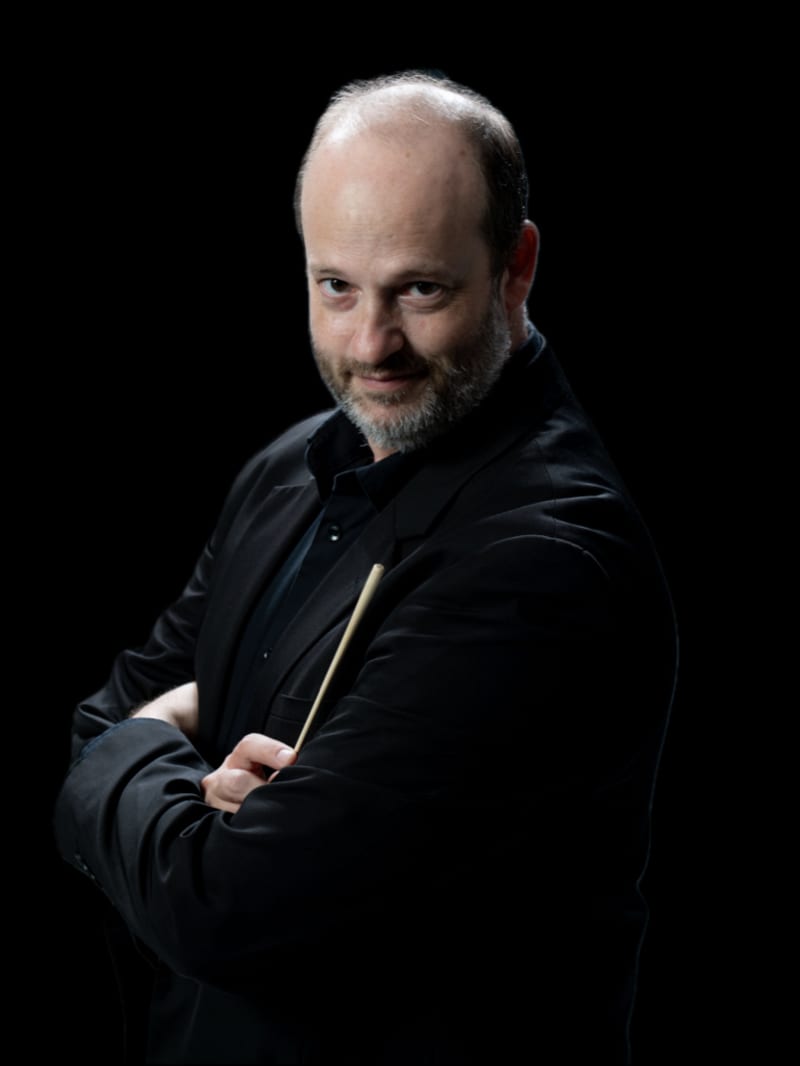
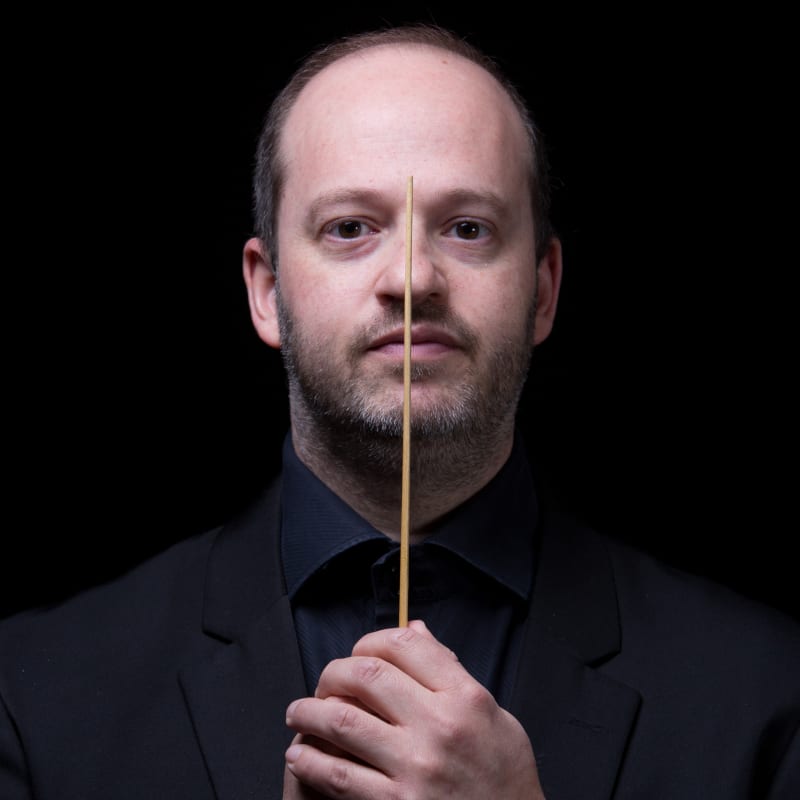
Foto professionali

Foto ad alta risoluzione per uso stampa e promozionale.

Video

Registrazioni di concerti ed estratti di prove.

Daniele Camiz - Mozart, Sinfonia n.36 K.425 "Linz" (conducting, front view)

Ripresa frontale fissa del direttore, registrata dal vivo. Wolfgang Amadeus Mozart – Sinfonia n. 36 in do maggiore K. 425 "Linz". Orchestra ICNT.

Guarda su YouTube

Daniele Camiz - Prokofiev, Symphony n.1 op.25 (conducting, front view)

Ripresa frontale fissa del direttore, registrata dal vivo durante il Concerto d’Inverno 2026. Sergej Prokofiev – Sinfonia n. 1 in re maggiore “Classica”, op. 25 Orchestra ICNT Direttore: Daniele Camiz Registrazione dal vivo, senza montaggi di studio.

Guarda su YouTube

Daniele Camiz - Schubert, Ouverture D591 (conducting, frontview)

Ripresa frontale fissa del direttore, registrata dal vivo durante il Concerto d’Inverno 2026. Franz Schubert - Ouverture in re maggiore, D 591 Orchestra ICNT Direttore: Daniele Camiz Registrazione dal vivo, senza montaggi di studio.

Guarda su YouTube

Daniele Camiz dirige "La morte di Aase" di Grieg

Guarda su YouTube

Contatti

Per ingaggi, interviste e richieste stampa